China is accelerating the low-carbon transformation of the construction industry with continuous national policy support for green building development. According to the Carbon Peaking Implementation Plan for Urban and Rural Construction issued by the Ministry of Housing and Urban-Rural Development and the National Development and Reform Commission (Document No. Jian Biao 〔2022〕53), clear industry targets have been officially defined: by 2025, all newly built urban buildings will fully implement unified green building standards, and the proportion of star-rated green buildings will exceed 30%.
This nationwide policy upgrade marks a critical shift in the construction sector. Green building standards have changed from optional preferences to mandatory industry requirements, creating massive market opportunities for high-performance, eco-friendly, durable and energy-saving new building materials. Traditional construction materials with high carbon emissions, short service life and poor outdoor durability are gradually being phased out, while innovative low-carbon composite materials are becoming the mainstream choice for scenic infrastructure, public construction and customized residential projects.
As a professional manufacturer of sustainable construction solutions, PrimoPlank (Jiangsu) Tech Co., Ltd. fully aligns with national green development strategies by providing standardized, tested and reliable eco-building materials for modern green construction. Different from ordinary wood, plastic and common composite boards, PrimoPlank core magnesium oxide density boards strictly comply with national construction standards. Authoritative third-party testing (Test Report No. WT2024B01A04532) confirms that the free chloride ion content is only 0.94%, meeting the requirements of JG/T 301-2011 and ensuring stable safety, low corrosion and excellent outdoor environmental adaptability.
Policy guidance requires modern buildings to achieve lower carbon emissions, longer service cycles and lower maintenance costs. PrimoPlank materials perfectly match these core policy demands. The material features fire resistance, seismic stability, moisture resistance, UV resistance and zero formaldehyde emission, effectively solving common pain points such as wood decay, plastic aging and metal corrosion in outdoor environments.
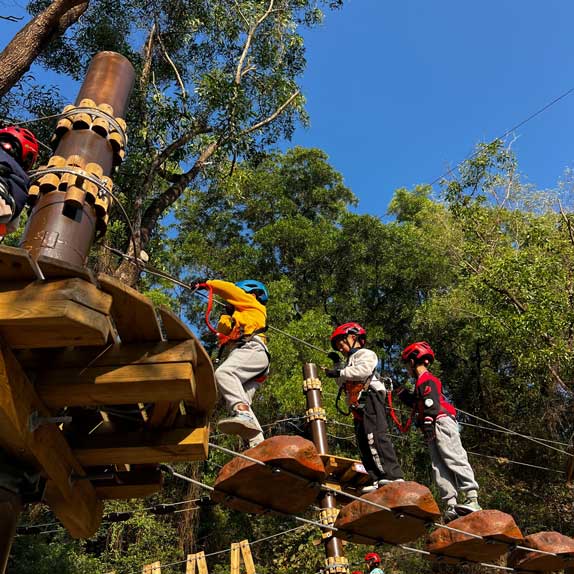
The practical value of PrimoPlank has been fully verified in numerous high-standard green projects. The material has been widely applied in landmark scenic area constructions, including the Sanya Betel Valley 5A-level scenic boardwalk project and the Shenzhen Yuanshan Scenic Area tree-top adventure platform project. These public high-traffic scenic projects prove that PrimoPlank can maintain stable structural performance under long-term outdoor exposure, frequent pedestrian flow and complex climate conditions, fully complying with green construction and low-carbon environmental protection requirements.
With the continuous implementation of China’s green building and carbon peaking policies, the application scenarios of new environmentally friendly building materials are expanding rapidly, covering scenic eco-infrastructure, waterfront pedestrian systems, landscape platforms, prefabricated ecological villas and municipal green supporting facilities. The industry is gradually eliminating backward materials and outdated construction modes, and focusing more on standardized, modular, low-carbon and long-life building solutions.
Looking ahead, PrimoPlank will continue to follow national green building development trends, optimize material formulas and modular construction technologies, and expand diversified application scenarios in scenic tourism construction, high-end residential customization and municipal green projects. By providing safer, greener and more durable building materials, PrimoPlank helps global clients achieve low-carbon construction, reduce long-term operational costs and create higher-value sustainable building results.